


You might ask which material is a better insulator. Ceramic is special because it can handle very high heat. It also blocks electricity better than plastic. If you check the numbers, ceramic insulators work up to 2,100°C. Plastic insulators only work up to 398°C. Here is a simple chart to show how both materials compare:
| Material Properties | Ceramic Insulators | Plastic Insulators |
|---|---|---|
| Dielectric strength (kV/mm) | 4 – 17 | 16 – 200 |
| Temperature resistance (°C) | up to 2,100 | up to 398 |
| Thermal conductivity (W/m.K) | 1 – 250 | 0.1 – 0.5 |
But sometimes, you might want plastic because it is lighter. It is also easier to use. What you choose depends on what you need for your project.
Key Takeaways
- Ceramic insulators can handle very high heat. They work up to 2,100°C. This makes them good for places with lots of heat.
- Plastic insulators are light and simple to put in. They are good for daily electrical things. They work well for low-voltage jobs.
- Ceramics are better for high-voltage systems. They give stronger electrical insulation because of their high dielectric strength.
- Plastics keep heat in or out better. They have lower thermal conductivity. This makes them good for thermal insulation.
- Think about what your project needs. Look at temperature, weight, and cost. This helps you pick the best insulator.
Which Is the Better Insulator
Ceramic as a Better Insulator
Ceramic is a strong insulator in many ways. You can use ceramic insulators where it gets very hot. Some ceramics work up to 2,100°C. This is much hotter than most plastics can handle. Ceramics do not burn or melt easily. This makes them safe for power lines and high-voltage equipment.
Ceramic insulators block electricity very well. Many types of ceramic, like alumina and glass-ceramic, have high dielectric strength. For example, alumina insulators can reach over 30 kV/mm. Here is a table that shows the dielectric strength of some common ceramics:
| Material | Dielectric Strength (kV/mm) |
|---|---|
| Glass-Ceramic (MACOR®) | 39.4 |
| Alumina (AL-300®) | 32.6 |
| Alumina (AL 995™) | 31.5 |
| Alumina (Deranox™ 970) | 30.6 |
| Alumina (Deranox™ 995) | 30.5 |
Ceramic insulators work well in high-voltage systems. You see them on power poles and in substations. They last a long time and do not break down fast, even in bad weather.
Tip: If you need an insulator for high heat or high voltage, ceramic is usually the better insulator.
Plastic as an Insulator
Plastic insulators have their own good points. Plastics are much lighter than ceramics. This makes them easy to move and install. Many plastics, like ABS, have good dielectric strength. Most plastics show strengths between 15 and 35 kV/mm. Some special plastics can go even higher.
| Material | Dielectric Strength (kV/mm) |
|---|---|
| ABS | 15–35 |
Plastics work well in everyday electrical devices. You find them in outlets, switches, and cords. They do not rust or corrode. You can shape plastics into many forms. This helps you use plastic insulators in lots of products.
- Most plastics have a dielectric strength in the range of 100 to 300 kV/cm.
- Plastics are often the better insulator for low-voltage and indoor uses.
Thermal vs. Electrical Insulation
You need to think about both thermal and electrical insulation when you pick a material. Ceramics and plastics act differently in each area.
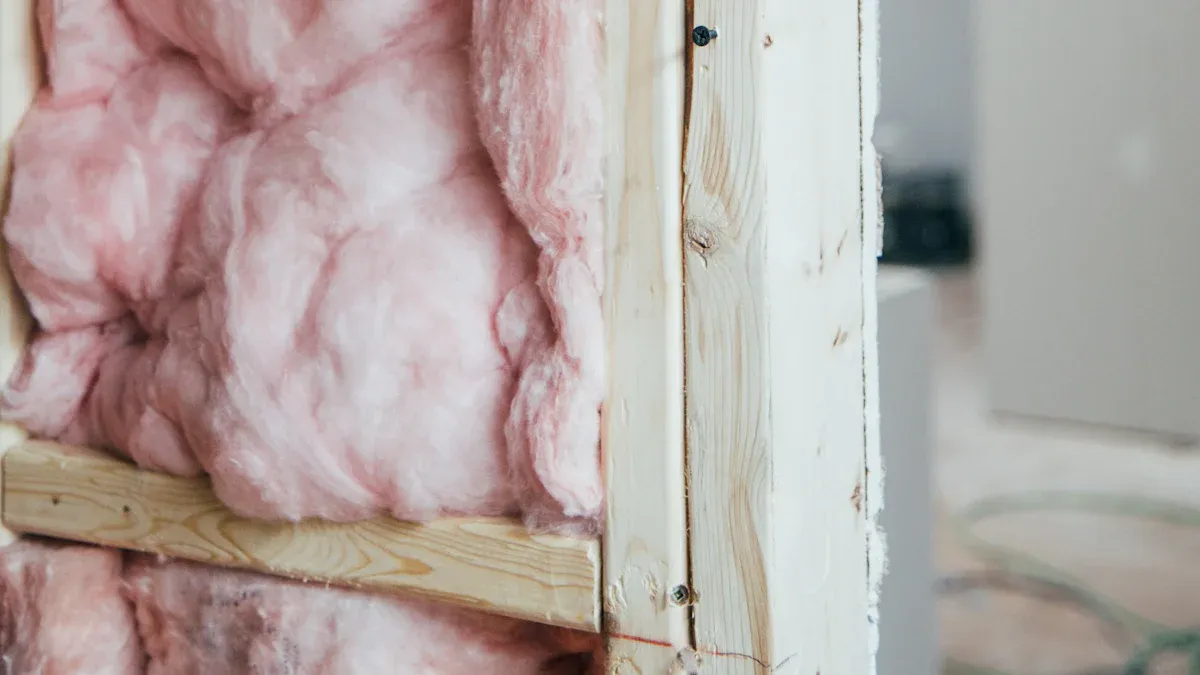
For thermal insulation, plastics usually do better. They have lower thermal conductivity. This means they stop heat from passing through more easily. Here is a table comparing the thermal conductivity of some common materials:
| Material | Thermal Conductivity (W/mK) |
|---|---|
| Ceramic fiber blanket | 0.032 |
| Polystyrene (Styrofoam) | 0.027 |
| Polyurethane (rigid) | 0.032 |
| Alumina (94%-99.8%) | 18 to 30 |
| Quartz | 1.5 |
| Glass-ceramics | 1.5 |
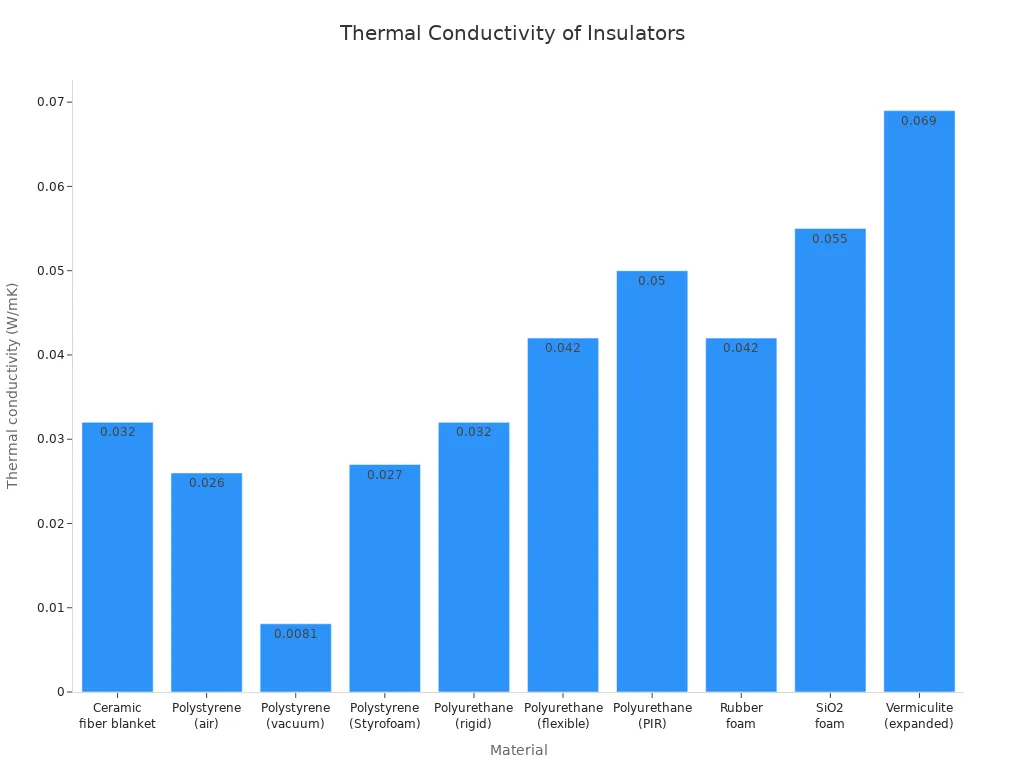
You can see that polystyrene and polyurethane, which are plastics, have much lower thermal conductivity than most ceramics. This means plastics keep heat in or out better. You often use them for insulation in buildings and refrigerators.
For electrical insulation, ceramics are often better. They can handle higher voltages and temperatures. Plastics work well for most home uses. Ceramics are the better insulator for power plants and heavy industry.
Note: Always match the insulator to your needs. For high heat or voltage, ceramics are the better insulator. For light weight and easy handling, plastics may work best.
Cost
Material Price
When you look at ceramic and plastic insulators, you see a big price gap. Ceramic insulators usually cost more. This is because they use special materials and need high heat to make. For example, ceramic bulk fiber costs about 100 Rs for each kilogram. Plastic insulators do not have one set price per kilogram. The price changes with the kind of plastic and the shape you want. Some plastics, like PVC or ABS, are cheaper than ceramics. You can see the average cost in the table below:
| Material Type | Average Cost (Rs/kg) |
|---|---|
| Ceramic Bulk Fiber | 100 |
| Plastic Insulator | N/A |
Ceramic insulators last a long time, but you pay more at first. Plastics help you save money when you start, especially for big projects. If you need the better insulator for high voltage, you might have to pay more for ceramics.
Tip: Always check the price for your project. Prices change with size, shape, and how much you need.
Installation
It is easier to install plastic insulators than ceramic ones. Plastics are lighter, so you can move and place them easily. You do not need special tools for most plastic insulators. You can cut, drill, or shape them with simple tools.
Ceramic insulators need gentle handling. They can break if you drop or hit them. You might need extra support or special brackets to hold them. Workers often use gloves and lifting tools for big ceramic pieces. Installing ceramics takes more time and can cost more because of these steps.
- Plastic insulators are good for quick jobs and places where you need to work fast.
- Ceramic insulators are better for projects where safety and long life are important.
If you want to save time and money when installing, plastic insulators are a simple choice. For hard jobs with high heat or voltage, ceramic insulators give you better protection.
Durability
Strength
When you pick an insulator, you want it to be strong. Ceramics and plastics are not the same in strength. Ceramics can take a lot of force before breaking. Some advanced ceramics are even stronger than regular ones. Look at this table to see the difference:
| Material Property | Traditional Ceramic | Advanced Ceramic | Composite Ceramic |
|---|---|---|---|
| Tensile strength (MPa) | 100-300 | 400-800 | 500-1200 |
Plastics are usually weaker than ceramics when you pull on them. Ceramics can handle pulling forces better. But strength is not just about pulling. It also matters if you drop or hit the insulator. Tests like Charpy or Izod show how much energy a material can take before it breaks. Impact resistance is important if the insulator might fall or get hit.
- Natural frequency tests show how insulators handle hail or shocks.
- Free falling ball tests show ceramics may get dents but do not always break.
- Porcelain insulators can take heat and stress, but hidden cracks can cause problems.
Ceramics are strong but can break suddenly. Plastics bend more before breaking, so they might not break as easily if dropped.
Lifespan
You want your insulator to last a long time, especially outside. Ceramics and plastics age in different ways. Ceramics do not rust and can take heat, so they last longer in tough places. Plastics can last a long time too if you take care of them. Some plastics can even clean themselves, which helps them last longer.
| Insulator Type | Lifespan Characteristics | Advantages | Disadvantages |
|---|---|---|---|
| Ceramic | Longer lifespan due to corrosion resistance and thermal stability. | Durability and resistance to extreme conditions. | Heavier and more fragile, prone to damage. |
| Polymer | Comparable durability with proper maintenance; self-cleaning properties can extend lifespan. | Lightness, flexibility, and better pollution resistance. | Less durable in extreme conditions without maintenance. |
Sunlight can change how long your insulator lasts. UV rays from the sun can make plastics work less well. Over time, the surface can attract water. Cracks and dirt can build up, which can cause problems with electricity.
- UV rays can make plastic insulators work worse.
- Getting older causes cracks and dirt, which can collect pollution.
- Pollution can make the surface conduct electricity, which is not safe.
Ceramic insulators usually last longer in bad weather. Plastics need more care to keep working well outside. If you want an insulator to last many years outdoors, ceramics are often the better choice.
Weight
Plastic’s Lightness
When you pick up a plastic insulator, it feels much lighter than ceramic. This makes it easy to carry and move. Workers can put plastic insulators in place quickly. They do not need big machines to lift them. This saves time and lowers the cost of work.
Plastic insulators also save money when you ship them. You can fit more in each truck. The trucks use less fuel because the load is lighter. You do not need special trucks to deliver them. This makes shipping simple and cheap.
- Composite and polymer insulators can be up to 90% lighter than porcelain.
- You can move more insulators at once, so you take fewer trips.
- The light weight means you pay less for shipping and handling.
- Towers and poles hold less weight, so you can use smaller supports.
Plastic insulators help lower building costs too. Lighter insulators do not put much stress on towers. You can use smaller bases for the towers. This saves money on building materials.
Tip: If you want to save money and finish faster, pick plastic insulators because they are light.
Ceramic’s Heaviness
Ceramic insulators are heavy when you lift them. You need more strength to move and install them. Workers often use cranes or special tools for big ceramic insulators. This takes more time and costs more money.
Heavy ceramic insulators cost more to ship. Trucks can carry fewer at a time. You may need bigger trucks to deliver them. Fuel costs are higher because the load is heavy. You spend more on moving and handling them.
- Porcelain insulators add more weight to towers.
- You need stronger towers and bigger bases to hold the extra weight.
- It takes longer to install them because workers must be careful with heavy pieces.
Ceramic insulators are heavy, but they feel strong and solid. You might pick ceramic if you need more strength than low weight. If you need to put insulators in hard places, plastic’s lightness is better.
Note: Always think about how much your insulator weighs. Lighter ones make work easier and cheaper. Heavy ones may be stronger, but they cost more to move and install.
Environment
High Temperature
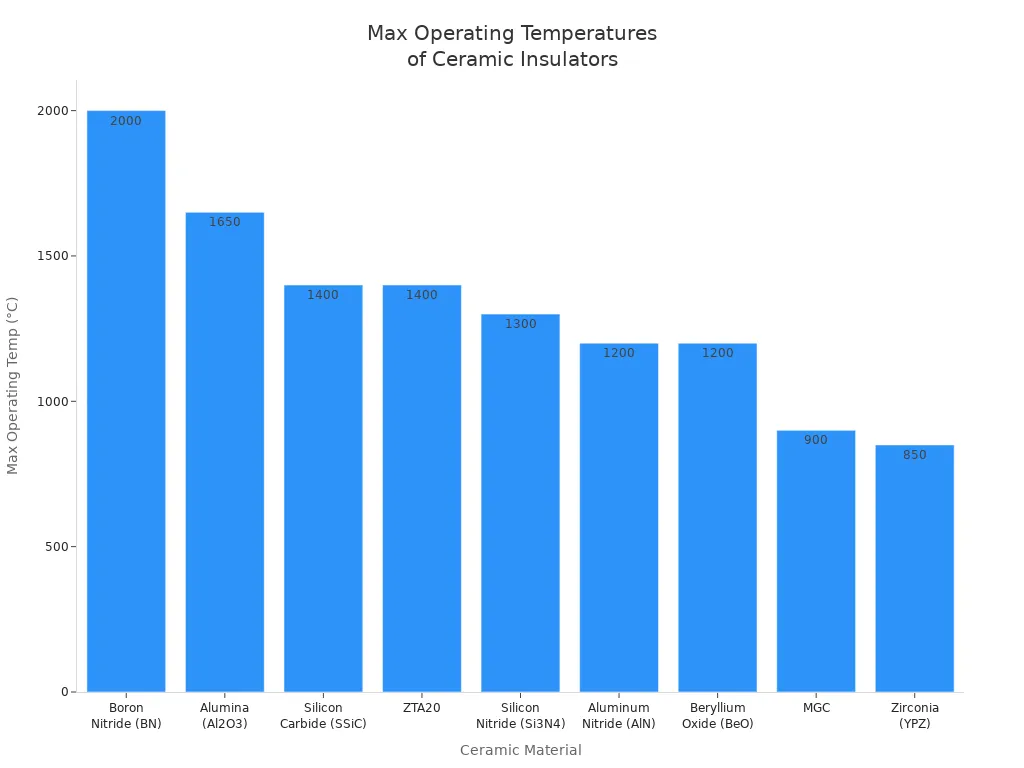
When you pick an insulator, think about heat. Ceramics are great because they handle very high heat. You can use ceramic insulators where it gets hotter than 1,000°C. Some ceramics, like boron nitride, work up to 2,000°C if the air is right. Plastics do not work well when it gets very hot. Most plastics start to melt or get weak above 200°C.
Here is a table that shows how different ceramic materials work at high heat:
| Ceramic Material | Max Operating Temp (°C) | Notes |
|---|---|---|
| Boron Nitride (BN) | 2000 | Inert atmosphere only |
| Alumina (Al2O3) | 1650 | Most widely used advanced ceramic |
| Silicon Carbide | 1400 | Excellent thermal conductivity |
| ZTA20 | 1400 | Toughened zirconia-alumina composite |
| Silicon Nitride | 1300 | Great thermal shock resistance |
| Aluminum Nitride | 1200 | Ideal for electronic substrates |
| Beryllium Oxide | 1200 | High conductivity, toxic during machining |
| MGC | 900 | Used in prototyping, electronics |
| Zirconia (YPZ) | 850 | Limited by phase instability |
Ceramic insulators stay strong at 200°C for a long time. You can use them in hot places like factories and power plants. Plastics cannot do this. If you use plastic above 200°C, it may melt or change shape. Pick ceramic if your project needs to handle high heat.
Tip: Ceramics are best for very hot places. Plastics work better in cooler spots.
Moisture Resistance
Water can hurt insulators, especially outside. You want a material that keeps water out. Porcelain is a ceramic with a smooth surface. Water does not get in, so porcelain insulators stay strong in rain or wet air. That is why you see porcelain insulators on power lines.
Plastics, like polymers, also keep out water. Many polymer insulators do not rust or corrode. You can use them outside and not worry about water. Some plastics even clean themselves, so they last longer.
Here is a table that shows how ceramics and plastics keep out moisture:
| Material Type | Key Feature | Description |
|---|---|---|
| Porcelain | Non-porous surface | Prevents moisture absorption, good for outdoor use |
| Polymer | High resistance to pollution | Durable against moisture and environmental factors |
Think about your environment before you choose. Ceramics protect well in wet weather. Plastics are flexible and fight pollution. Both help keep your electrical systems safe when water is a problem.
If you need an insulator for outside, porcelain and polymer insulators can protect your equipment from water and humidity.
Uses
Ceramic Applications
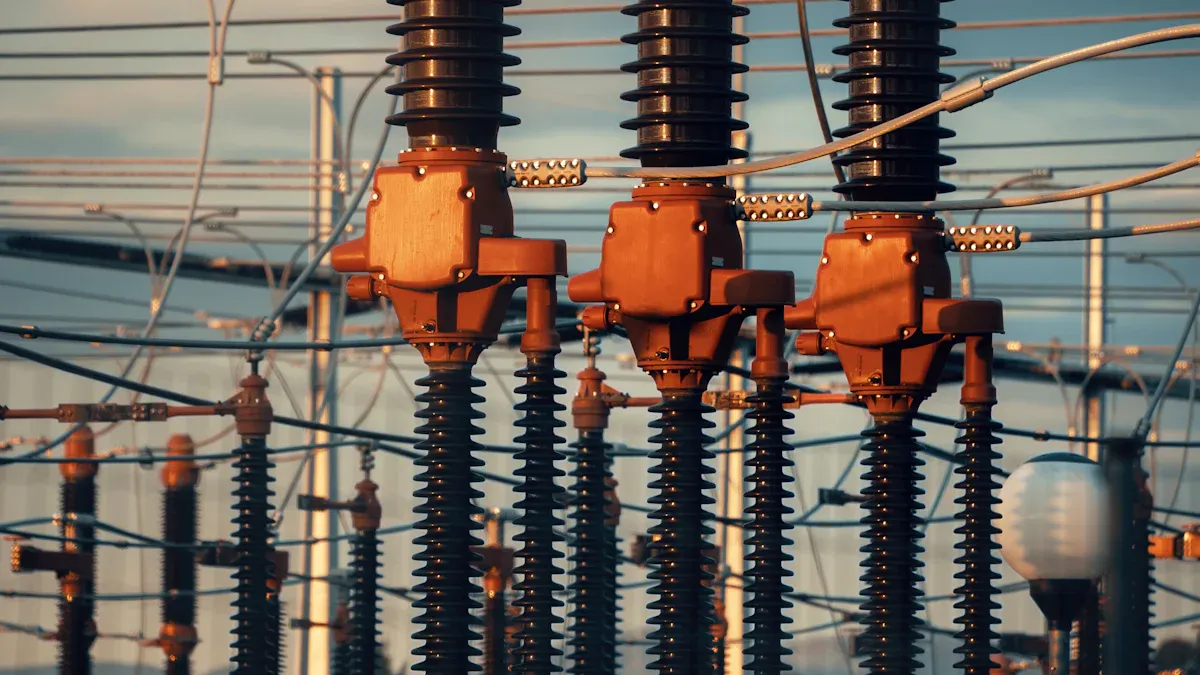
Ceramic insulators are used where safety is important. Power lines need ceramics to hold up wires. These insulators work for homes and big towers. Substations use ceramics to control high voltages. Factories use ceramics in motors and transformers for safety.
Ceramics help in telecommunications too. Antennas use ceramics to stop electrical noise. Railways use ceramics to power electric trains. You see ceramics in power plants like thermal and hydro stations. These insulators keep machines safe and stop short circuits.
- Power lines
- Substations
- Motors and transformers
- Antennas
- Railway power systems
- Power plants
Ceramic insulators work well in hot places. They last where there is heat and chemicals. But ceramics can break if dropped or hit. If your project has lots of bumps, you might need something else.
If you need insulation for high voltage or heat, ceramics are a good choice.
Plastic Applications
Plastic insulators are found in many things at home and work. You use them every day and may not notice. Here are some common uses:
| Application Type | Description |
|---|---|
| Insulating Tape | Stops electricity from moving through wires and metal. |
| Wire Sheathing | Covers cables to protect from damage and weather. |
| Cooking Pots | Does not conduct electricity, safer than metal, resists acid. |
| Cavity Wall Insulation | Keeps water out, blocks sound, and keeps heat in. |
| Circuit Boards | Used in electronics for safety and protection. |
| Circuit Breaker Housings | Keeps electrical systems safe and insulated. |
| Conduits | Protects wires from harm and weather. |
| Casings | Covers electrical parts for safety and insulation. |
You pick plastic insulators when you want light weight and easy setup. Plastics work best in cooler places, under 100°C. If you need something tough, choose strong plastics that bend. For safety, use plastics that do not hold static. In food and medicine, use plastics that are safe for health.
If you want fast setup and easy use, plastics are a smart choice for daily needs.
Ceramic insulators work best for high voltage and heat. Plastic insulators are easier to carry and install. Ceramics last longer in hard places. Plastics cost less and are lighter. Think about what you need before you choose. Look at this table to help you pick:
| Decision Point | What to Check |
|---|---|
| Voltage and electrical needs | Match dielectric strength to your system |
| Heat resistance | Pick ceramics for high temperatures |
| Weight and handling | Choose plastics for easy installation |
| Cost over time | Ceramics often save money in the long run |
Tip: Pick the insulator that fits your project’s voltage, temperature, and how you will use it. This helps you get the best results.
FAQ
What makes ceramic a better insulator for high voltage?
Ceramic stops electricity and heat very well. You can use ceramic insulators on power lines and in substations. They do not melt or catch fire. Ceramics give strong safety where there is high voltage.
Can you use plastic insulators outdoors?
Plastic insulators can be used outside. Many plastics keep out water and dirt. You should check if the plastic can handle sun and rain. Some plastics need extra care to last longer when used outdoors.
Which insulator is easier to install?
Plastic insulators are much lighter than ceramic ones. You can move and put them in place fast. You do not need special tools for plastic. Ceramic insulators are heavy and need more support. You must be careful when handling ceramics.
Do ceramic insulators break easily?
Ceramic insulators are strong but can crack if dropped. You should handle ceramics gently. They last a long time if you keep them safe from hard hits.


