


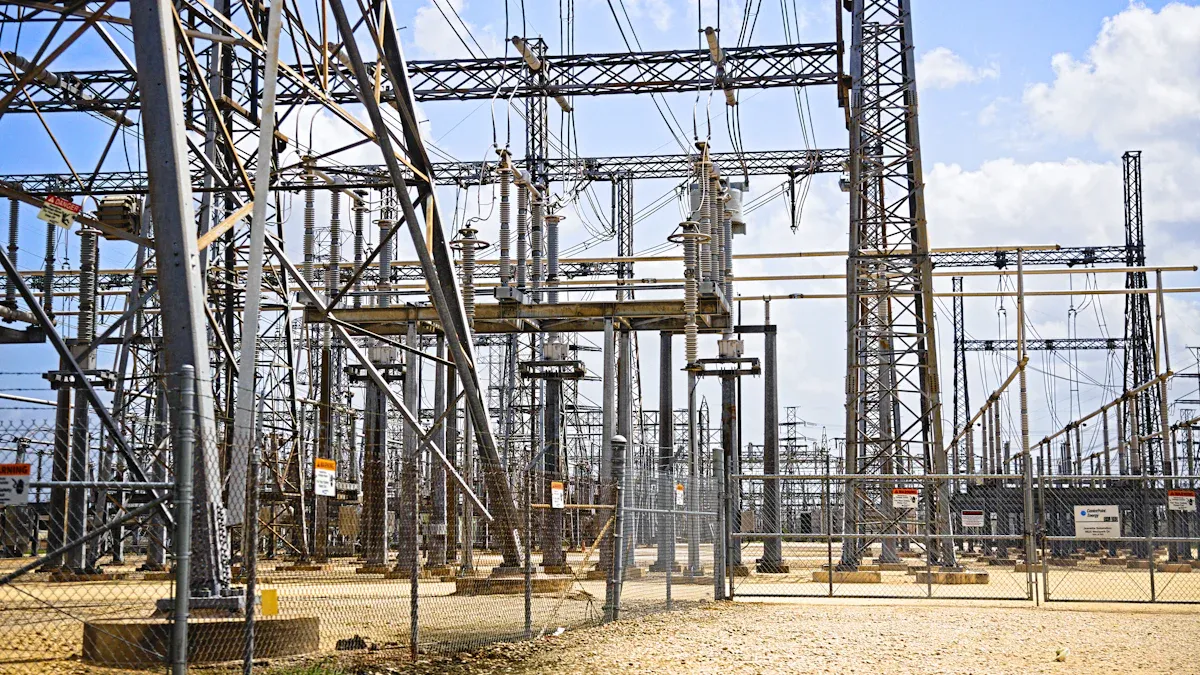
Substations use different main types of lightning arrester to keep equipment safe from electrical surges.
- Station class
- Intermediate class
- Distribution class
- Porcelain type
- Metal oxide type
- Valve type
- Expulsion type
- Gap type (this one is not used anymore)
A lightning arrester blocks high-voltage spikes. This keeps transformers and other parts from getting damaged. This device helps the power system stay safe and work well.
Key Takeaways
- Lightning arresters keep substations safe from high-voltage surges. They stop damage to important equipment. Different arresters work for different voltage levels. Metal oxide arresters are the most common. They protect quickly and strongly. It is important to pick the right arrester. Good installation and regular checks are needed. This helps arresters work well and stops power outages. Porcelain arresters last a long time but can break easily. Gap and expulsion arresters are older types. They do not work as well and are not used much now. Using the right arrester in the right place is important. This lowers power outages and keeps the system safe.
Types of Lightning Arrester
Station Class
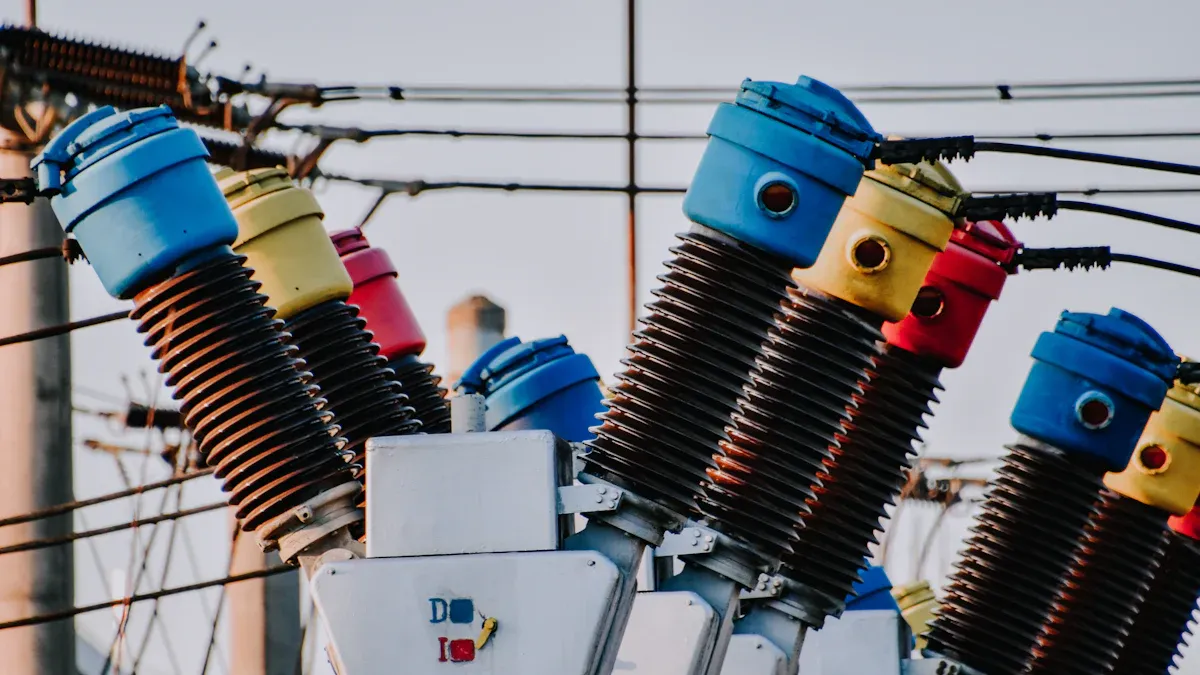
Station class lightning arresters protect big substations. They have low discharge voltage to keep equipment safe. These arresters have special features to stop failures from causing more damage. If one fails, it will not hurt other equipment nearby. The materials and seals keep out water, so they work in bad weather. Engineers test them harder than normal to make sure they last. Station class arresters are used for voltages above 110 kV. They are found in large transmission substations.
Note: Station class arresters help keep high-voltage substations safe and steady.
Intermediate Class
Intermediate class lightning arresters are for medium-voltage substations. They fit between station and distribution class arresters. These arresters use metal-oxide varistors, called MOVs, to stop surges. MOVs let only a little current pass at normal voltage. When voltage jumps, resistance drops, and the arrester sends the surge away. If voltage gets too high, the arrester protects itself from harm.
Utilities test these arresters in many ways. They look for cracks or water damage. They use thermal scans to find hot spots. They do electrical tests like insulation resistance and watts loss tests. Test voltages go from 2.5 kV to 440 kV. Good arresters have high resistance inside, so they do not leak much current. Utilities that test often have fewer outages and save money by changing only bad arresters.
Distribution Class
Distribution class lightning arresters protect lower voltage systems in cities. These arresters are used on small transmission lines that look like regular distribution lines. Common voltages are 69 kV and 110 kV. For example, a 69 kV line in Lakeland, Florida, has used these arresters for over 20 years. Sometimes, engineers put arresters on every phase of every tower to stop lightning. Usually, they put arresters only where lightning happens a lot, which cuts outages.
A lightning protection system for a city 110 kV substation shows why these arresters matter. They help stop outages from lightning and keep power steady. Distribution class arresters also make it easier to upgrade substations to higher voltages without rebuilding everything.
Porcelain Type
Porcelain lightning arresters are known for being strong and lasting long. Substations use them because they protect against lightning surges for many years. These arresters come in station, intermediate, and distribution classes. Station class porcelain arresters work very well and last a long time. Many utilities use porcelain arresters for high-voltage jobs and when fixing old substations. Their dependability helps keep the power grid steady.
Metal Oxide Type
Metal oxide type arresters, called MOSAs, are the most popular now. They use zinc oxide blocks with no gaps, so they stop surges well. MOSAs act fast when voltage spikes and limit voltage better than old types. Their non-linearity exponent (α) is from 25 to 60, which means they clamp voltage strongly during surges. On a 150 kV line, MOSAs control leftover voltage and take in more energy, so they protect equipment better than other arresters.
Valve Type
Valve type lightning arresters use spark gaps and special resistor blocks. These resistors, made from silicon carbide, limit surge current after the gaps spark. Valve type arresters were the main protection before metal oxide types became common. Some old substations still use them, but most new ones use MOSAs because they work better and last longer.
Expulsion Type
Expulsion type arresters have a tube that makes gas when a surge goes through. The gas puts out the arc made by the surge. These arresters are simple and cheap, so utilities use them on distribution lines and in the countryside. But they do not work well at high voltages or in dirty places. Modern substations do not use expulsion type arresters for important equipment.
Gap Type (Obsolete)
Gap type lightning arresters use air gaps to block surges. When a surge comes, the gap sparks and sends the current away. These arresters do not have non-linear resistors, so they cannot limit voltage as well as newer types. Gap type arresters are now outdated. Modern substations use metal oxide or porcelain types instead because they protect better and are more reliable.
⚠️ Alert: Gap type arresters should not be used in new substations because they do not work well and can be unsafe.
How Lightning Arresters Work
Basic Principle
A lightning arrester keeps electrical equipment safe from high voltage surges. It acts like a guard for the power system. When everything is normal, the arrester does not let electricity pass through it. If a surge, like lightning, hits the line, the arrester quickly lets the surge go to the ground. This stops the surge from hurting important equipment. After the surge is gone, the arrester blocks any more current from passing. The table below explains how the arrester works and what it can do:
| Aspect | Description / Values |
| Working Principle | Stays off during normal times; turns on during surges to send extra electricity to the ground |
| Surge Current Waveforms | Can handle 10/350 μs, 8/20 μs, and other wave shapes |
| Surge Arrester Classes | Station, Intermediate, Distribution, Secondary |
| Performance Ratings | Looks at working voltage, surge current, protection level, and test types |
| Surge Protection Functions | Gives a low resistance path, holds down voltage, stops extra current |
| Selection Considerations | Follows rules, checks for lots of lightning, cable setup, and cost vs. safety |
Construction Features
Lightning arresters are built with special parts to make them strong and safe:
- The main part that stops surges is a zinc oxide column. This part changes its resistance when needed.
- A tube made from strong plastic helps keep the arrester tough and safe from breaking.
- Silica gel inside keeps water away and makes sure the inside stays dry.
- If the arrester fails, a pressure plate will break open to let out extra pressure safely.
- Tall arresters have a gradient ring to spread out the voltage across the zinc oxide parts.
- Two grounding systems connect the arrester body and the ground terminal to help send surges away.
These parts help the arrester work well even when there are big surges or bad weather.
Surge Protection Mechanism
Lightning arresters use smart ways to keep substations safe from surges. When a surge happens, the arrester gives the surge a path to the ground. This keeps equipment from getting too much voltage. Engineers test arresters by sending strong surges and checking if they still work. They also use special tools to watch the arrester and see if it is healthy. Computer tests show that putting arresters in the right places helps stop damage and flashover. These steps make sure the arrester keeps protecting the system, even after many surges.
Pros, Cons, and Applications
Advantages
Lightning arresters help keep substations and power lines safe. They stop dangerous surges from hurting equipment. This helps the power stay on for everyone. Many tests show that surge arresters, like metal oxide and externally gapped line arresters, lower the number of outages and insulation problems. When engineers put arresters in the right places, there is less damage from lightning and fewer backflashovers.
- Surge arresters help stop outages caused by lightning and make the system more reliable.
- Externally gapped line arresters do not waste energy and do not cause long-term problems.
- Metal oxide arresters act fast and take in more energy, so they protect equipment better.
- Tests using computers show that putting arresters in good spots lowers the risk of equipment breaking.
Tip: Using arresters that can take in a lot of energy helps make better lightning protection systems.
Disadvantages
Lightning arresters also have some problems. They need to be checked often to make sure they work right. If they are not put in or taken care of well, they might not work during a surge. Some types, like porcelain arresters, can break if hit hard or if the weather is very bad. Expulsion and gap types do not protect as well as newer types and may not last as long.
- Porcelain arresters are heavy and can break if dropped.
- Old types, like gap and expulsion arresters, do not stop high voltage as well.
- If arresters are not put in the right place or not checked, equipment can get damaged.
Typical Uses
Different arresters are used for different jobs. Metal oxide arresters are best for high-voltage lines and substations because they work fast and handle strong surges. Polymer arresters are light and do not rust, so they are good for places near the sea or where the air is dirty. Porcelain arresters are strong and last a long time, so they are used for old high-voltage jobs. Distribution class arresters are used to protect homes and small businesses.
| Arrester Type | Performance Characteristics | Typical Applications |
| Metal Oxide Varistor | Fast, reliable, takes in lots of energy | Transmission lines, substations |
| Polymer | Light, does not rust, stands up to bad weather | Coastal, dirty, or earthquake areas |
| Porcelain | Strong, lasts long, but heavy | Old high-voltage substations |
| Distribution Class | Cheap, easy to put in | Homes, small businesses |
Power companies use lightning arresters in many places. They use them in substations, on transmission lines, and in distribution networks. They protect transformers, switchgear, and control systems. Factories, offices, and homes also use them to keep equipment safe from surges.
Selection and Maintenance
Choosing the Right Arrester
Picking the right lightning arrester keeps substation equipment safe. It also helps everything work well. Engineers think about a few key things:
- They pick a continuous operating voltage (Uc) that is at least 5% higher than the highest phase-to-earth voltage. This makes the arrester last longer.
- They check if the arrester can handle short overvoltages. They compare the worst event to the arrester’s withstand curve. If the event is too strong, they choose a higher Uc rating.
- There should be at least a 15% gap between the arrester’s protective level and the equipment’s impulse withstand voltage. This keeps the insulation safe.
- The energy handling class should match how much lightning the area gets. For example, in a place with a ground flash density of 5, a 100 kA surge almost never happens—maybe once every 800 years.
- The short-circuit current rating must be as high as or higher than the system’s fault current. This stops dangerous failures.
These steps follow world rules and help engineers pick the right arrester for each job.
Installation Tips
Putting in the lightning arrester the right way helps it work better. Studies show that putting arresters next to insulators on towers in risky places cuts outages. Engineers use computer models to decide how many arresters to use and where to put them. For example, a 230 kV line in Brazil had 68% fewer outages after arresters were placed in the best spots.
Lightning Location Systems help find towers that need more protection. Engineers also think about the transfer effect. This can make voltages go up on nearby towers if they are not protected. Some types of arresters, like MCIA, work better for certain lines, especially double circuits under 275 kV.
Tip: Always follow what the maker says and use proven ways to install for the best results.
Maintenance Best Practices
Checking lightning arresters often keeps them working well. Workers look for cracks, dirt, or water damage. They use thermal cameras to find hot spots. They also do electrical tests to check resistance and leakage current. Cleaning the arrester and checking wires stops failures. If an arrester looks worn out or broken, changing it fast keeps equipment safe.
A good plan for maintenance has regular checks, keeping records, and fixing problems right away. This helps the arrester last longer and keeps the substation safe.
Substations have many types and classes of arresters to guard equipment from surges. Picking the right arrester and putting it near where power comes in helps stop voltage drops. This also makes surge protection better. Using metal oxide technology and strong grounding makes the system more reliable. Monte Carlo simulations show that good setup and care help arresters last longer before breaking. Learning about new rules and best ways to work keeps substations safe and working well.
FAQ
What does a lightning arrester do in a substation?
A lightning arrester keeps substation equipment safe from high voltage surges. It sends dangerous electricity down into the ground. This helps protect transformers and other parts during storms.
How often should workers check a lightning arrester?
Workers need to check a lightning arrester at least once every year. They look for cracks, dirt, or any damage. Checking often helps stop problems and keeps the substation safe.
Can a lightning arrester stop all types of surges?
A lightning arrester works best for lightning and switching surges. It cannot stop every surge, but it lowers the chance of equipment getting damaged.
Why do some substations use metal oxide arresters?
Metal oxide arresters work fast and handle strong surges well. They protect equipment better than old types. Many substations pick them because they last long and respond quickly.
Tip: Always follow the maker’s instructions when putting in or checking a lightning arrester.


