


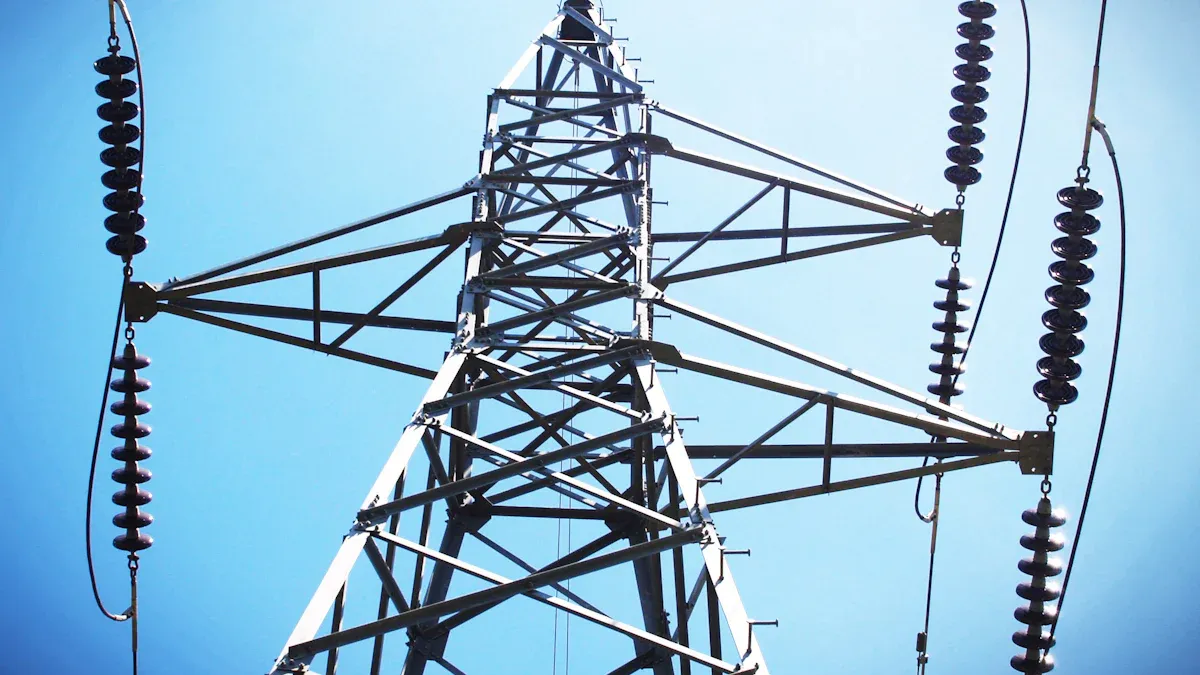
A strain type insulator is a device that holds wires tightly. It also keeps the wires from touching each other. This device is used when wires are pulled very hard. Engineers put this insulator on power lines where there is a lot of stress. These places include dead ends, corners, or long stretches of wire.
- Strain type insulators are used a lot in the power industry. People use them in North America, Europe, and Asia-Pacific.
- They are used because they help with too much pulling force. They also keep parts of the wire apart. If a wire breaks, they help stop more problems.
- Many companies sell these insulators all over the world. ABB and MacLean Power Systems are top companies for these products.
Key Takeaways
- Strain type insulators keep wires tight where pulling is strong, like at corners and ends. They help keep wires safe and apart from each other. They are made from strong things like porcelain, glass, or fiberglass. These materials stop electricity and can handle bad weather. Engineers use many insulator discs joined together for high voltages and heavy pulls. This makes them good for power lines and radio antennas. Strain insulators work best in hard places with strong pulls and high voltage. They are easy to fix by changing one disc if needed. Even though they are strong, these insulators need cleaning and checking often. This helps stop damage from dirt, cracks, and weather.
Strain Type Insulator Basics
Definition
A strain type insulator is a special device in electrical engineering. It holds wires tightly so they do not touch. Engineers use this insulator when wires need to handle strong pulling. Its main job is to support wires at turns or ends.
Some important features are:
- Strain insulators are used sideways to stop a conductor.
- Suspension and strain insulators look almost the same. If used up and down, they are called suspension insulators. If used sideways, they are called strain insulators.
- There are two main kinds: unipart and multipart. Most new designs use unipart insulators.
- Unipart insulators have one glass shell with a steel cap and pin. These can connect together to make a string.
- The metal parts give the insulator its strength. Adding more units makes it better at blocking electricity.
- Strain insulator strings can handle very high voltages, even up to 1,000,000 volts.
- Common shapes are sombrero, bell, and aerodynamic.
Working Principle
A strain type insulator works by holding the wire and stopping electricity from going to the pole. It uses strong materials like glass, porcelain, or fiberglass. These materials help it carry heavy loads and block electricity.
The working steps are:
- The insulator connects the wire to the pole or tower. It takes the pull from the wire and moves it safely.
- For long wires or strong pulls, engineers use several insulators in a row. This makes it stronger and better at blocking electricity.
- In places with very strong pulls, like over rivers, heavy steel plates hold many strings together to share the weight.
- The shape helps water run off and stops leaks. Sideways types have flanges, and up-and-down types are shaped like bells.
- The strain type insulator keeps wires tight and safe, even with strong pulls, and stops electricity from reaching the pole.
Note: Strain type insulators are very important for keeping overhead lines safe and working well, especially where wires are pulled hard or change direction.
Construction and Materials
Design
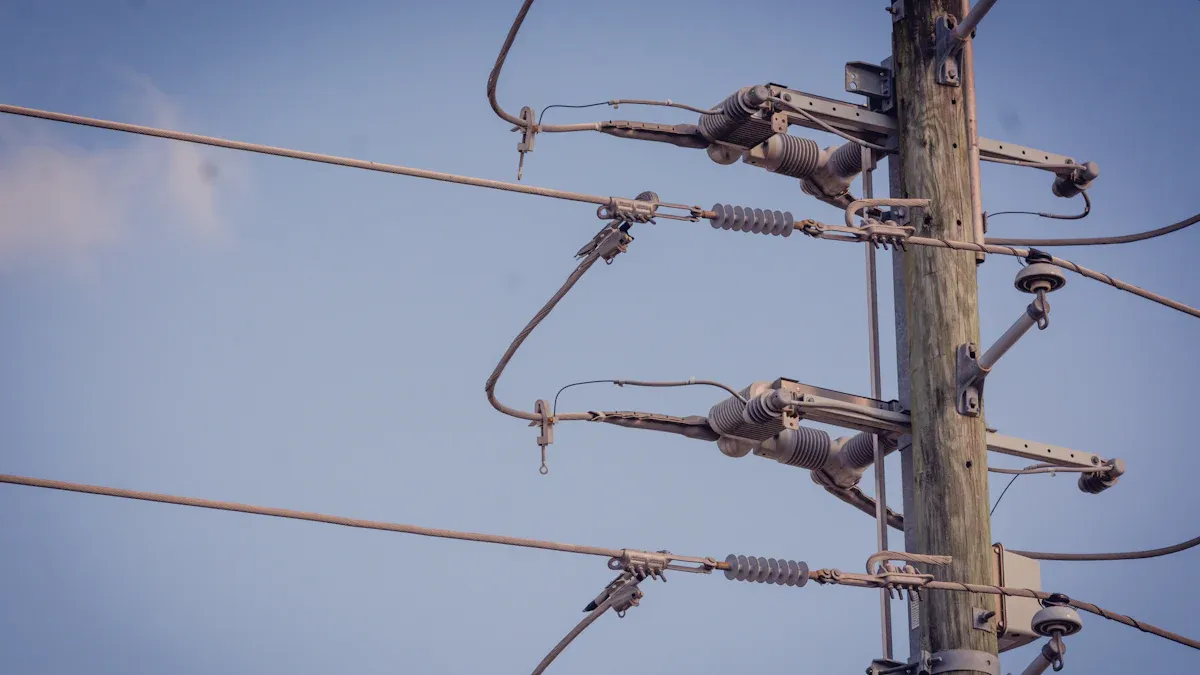
Engineers make these insulators to handle strong pulls and stop electricity. The main part is made from porcelain, glass, or fiberglass. These materials make the insulator strong and help block electricity. Many insulators have a hollow middle. This makes them lighter and more stable. The outside shell keeps out rain, dust, and sunlight.
Key parts are:
- Insulator body: Made from porcelain, glass, or fiberglass for strength and insulation.
- Supporting hardware: Joins insulator discs and connects many strings if needed.
- Steel plates: Used to join strings for extra strength in tough spots.
- Insulator discs: Put together in strings to match the voltage.
- Metal end fittings: Hold the insulator tightly to wires or towers.
- Ribs or sheds: Make the surface bigger and help keep it dry.
These parts help the insulator stand up to pulling, bending, wind, and shaking. Engineers use them on transmission lines and radio antennas. Both strength and insulation are important in these places.
Note: Some new designs have sensors to check the insulator all the time. Some use special coatings to protect better against weather.
Material Choices
Manufacturers pick materials based on what the power system needs and the weather. Porcelain and glass are used most often. Porcelain is very strong, blocks electricity well, and stands up to water, dirt, and sunlight. Glass is made stronger by heating. It blocks electricity and is clear, so cracks are easy to see.
Some insulators use composite materials like fiberglass mixed with plastic. These are light, strong, and can handle bad weather and chemicals. But they are not used as much outside for strain type insulators.
The table below shows the main materials:
| Material Type | Key Properties | Best Use Cases |
| Porcelain | Strong, lasts long, stands up to water and dirt | High voltage, tough places |
| Glass | Blocks electricity, easy to check, does not rust | Medium loads, clean places |
| Composite | Light, bends, stands up to weather | When less weight and toughness are needed |
| Ceramics | Hard, tough, takes hits well |
High tension, outdoor use
|
Manufacturers sometimes add coatings for more protection. Silicone rubber coatings keep water away and block sunlight. Anti-pollution coatings help keep the surface clean and lower the chance of electrical problems. Metal parts often get coatings to stop rust and make them last longer.
Types
Main Variants
Engineers pick different insulators for power lines. The main types are strain insulators, stay insulators, and shackle insulators. Each one is made for a special job.
Strain insulators work best at the ends or corners of lines. They use a chain of disc-shaped pieces. More discs are added when the voltage is higher. For example, three discs are used for 33 kV lines. Fifteen discs are needed for 220 kV lines. This setup lets the insulator handle strong pulls and high voltage.
Stay insulators are used in stay wires for low voltage lines. They are usually made from porcelain. Their job is to keep the stay wire from touching the ground if it snaps. These insulators also stop electricity from leaking into the earth.
Shackle insulators are also called spool insulators. They are used in low voltage networks. They can be put on in different ways and have a hole that spreads out the force. Today, engineers use them less because many wires are now underground.
| Variant | Application Context | Design Characteristics |
| Strain Insulator | Dead ends or sharp corners | Suspension strings with multiple discs; more discs for higher voltage |
| Stay Insulator | Stay wires for low voltage lines | Porcelain; insulates stay wires from ground |
| Shackle Insulator | Low voltage distribution networks | M
ounted horizontally or vertically; tapered hole |
Note: When the voltage goes up, more discs are added to the strain insulator string. This helps stop both breaking and electrical problems.
Shackle and Suspension
Shackle and suspension insulators are made for different jobs. Shackle insulators are used in low voltage lines under 33 kV. They are small and made from one piece of porcelain. Workers bolt them right to poles or cross arms. These insulators do not move, so they are not very flexible.
Suspension strain type insulators are used in high voltage lines above 33 kV. They are made from several porcelain discs linked together. These strings hang from tower arms and can swing to handle wind or movement. If one disc breaks, workers can change just that disc.
| Feature | Shackle Insulator | Suspension Strain Type Insulator |
| Voltage Rating | Low voltage (below 33 kV) | High voltage (above 33 kV) |
| Construction | Small, single porcelain unit | Multiple discs in series |
| Mounting | Fixed to poles or cross arms | Hung from tower arms, vertical arrangement |
| Flexibility | Less flexible | Flexible, can swing |
| Application | Low voltage lines | Dead ends or sharp curves in high voltage lines |
| Maintenance | Replace whole insulator if damaged | Replace individual discs |
| Usage Trend | Decreasing | Widely used |
Tip: Suspension insulators are now the most popular for overhead lines. They are easy to fix and can handle strong pulls.
Applications

Power Lines
Strain type insulators are very important for power lines. Engineers use them where wires end or turn. They also use them where wires are pulled hard. These insulators keep wires tight and safe. They stop electricity from leaking to the pole or tower.
In power networks, strain type insulators hold up the wires. They connect wires to poles or towers. They keep wires apart so they do not touch. This stops wires from touching each other or the ground. If wires touch, it can be dangerous. Strain type insulators are found at dead ends, corners, and long wire stretches.
Note: Strain type insulators help stop wires from breaking. They also help stop electrical problems. They can handle high voltages, like 33 kV or more. They are strong enough for big pulls from wires.
Radio Antennas
Radio antennas need strain type insulators for safety. These insulators go in the guy wires that hold up the antenna. Their job is to split the guy wires into parts. This stops high voltage from going down the wires to the ground. It keeps people and equipment safe from shocks.
Strain type insulators also stop unwanted electric problems. Engineers put several insulators along the guy wires. This helps stop static and too much voltage. These insulators are made from ceramic or glass. They are shaped to handle pulling and squeezing. Some radio masts use voltages as high as 400 kV. The insulators must be strong and work well.
- Strain insulators in antenna systems:
- Keep parts of guy wires apart
- Stop shock dangers and short circuits
- Break up wires to stop electric problems
- Handle both pulling and electric loads
High Tension Points
High tension points need special care in power systems. Strain type insulators hold wires where lines turn, end, or get pulled hard. These places include dead-end poles, sharp corners, and line changes.
At these spots, wires pull hard on the supports. Strain type insulators give the strength to hold wires in place. They also keep wires away from the pole or tower. This stops electricity from leaking and causing trouble. Engineers use several insulator discs together for higher voltages and stronger pulls.
- Common places for strain type insulators:
- Dead-end poles
- Corners or sharp turns
- Where the line changes direction
- Long wires over rivers or valleys
Tip: Strain type insulators are made for tough places. They can handle heavy snow, ice, and wind. Their design helps them last in dirty or rough weather.
Advantages and Comparison
Benefits
Strain type insulators give strong support in power systems. They keep wires tight at dead ends, corners, and long wires. Their shape lets them handle strong pulls without breaking. Engineers can add more discs to block higher voltage. This makes them useful for many jobs. These insulators work well in bad weather like rain, snow, and wind. Their design lets workers fix them by changing one disc at a time. Strain type insulators last a long time, even in rough places.
Tip: Strain type insulators are stronger than pin type insulators. They are best for places with strong pulls or sharp turns.
Limitations
Strain type insulators have some problems in use:
- Dust and dirt can cover the surface and cause flashover.
- Strong pulls can make cracks in the insulator.
- Heat and sun can make the material get old and weak.
- Electricity can wear out the insulator over time.
- Water can get inside small cracks and cause trouble.
- Birds can hurt polymer types, and fire can melt them.
- Salt from the sea can make them fail more often.
- They are heavy and hard to put in, so skilled workers are needed.
| Environmental Challenge | Description |
| Contamination Risk | Dust and salt make the surface less safe. |
| Mechanical Stresses | Pulls and wind can break or crack them. |
| Aging and Degradation | Sun, rain, and heat wear out the parts. |
| Brittleness | Ceramic types can crack if dropped or hit |
Comparison with Other Insulators
Strain type insulators are very strong. Pin type insulators work for medium voltages up to 33 kV. But they get big and hard to use for higher voltages or heavy pulls. Strain insulators are better for strong pulls at ends or sharp turns. Suspension insulators can handle even higher voltages by adding more discs. This makes them good for big power lines.
When picking an insulator, engineers think about:
- How much pull is on the wire.
- The voltage needed for the line.
- The weather, like dirt, wetness, and heat.
- How heavy it is and how easy it is to put in.
- The price and how much care it needs.
Strain type insulators work better than pin insulators where pulls are strong. Suspension insulators are best for very high voltages. Each kind has its own use, but strain type insulators are best for strong pulls and medium to high voltages.
A strain type insulator is very important in power systems. It gives strength and stops electricity from leaking at key spots. Some main things to know are:
- It is made from strong stuff like porcelain or glass with metal parts.
- People use it at dead ends, corners, and on radio antennas.
- Picking the right material and type keeps things safe and makes it last longer.
| Factor | Importance |
| Material Choice | Changes how strong and tough it is |
| Type Selection | Must fit the pull and voltage needed |
Engineers use these facts to pick the best insulator. This helps keep electrical systems safe and working well.
FAQ
What is the main job of a strain type insulator?
A strain type insulator keeps wires tight where they are pulled hard. It stops wires from touching each other or the pole. This helps stop electrical accidents from happening.
Where do engineers use strain type insulators most often?
Engineers put strain type insulators at the ends of power lines. They also use them at sharp turns and long wire stretches. These insulators are used on radio antennas and high-tension spots too.
How do strain type insulators handle high voltage?
Strain type insulators are made from strong things like porcelain or glass. Engineers join many insulator discs together in a row. This setup blocks high voltage and keeps everything safe.
What problems can affect strain type insulators?
| Problem | Effect |
| Dirt buildup | Can cause electricity to jump |
| Cracks | Makes the insulator weaker |
| Weather damage | Shortens how long it lasts |
| Salt exposure | Makes it break more easily |


