


Yes, ceramic is a good insulator for electricity. You can find ceramic insulator materials in many places. They block electrical flow very well. Scientists pick ceramics because they are strong. Ceramics stay stable when electricity passes through them. They also do not get damaged by harsh environments. Ceramics are easy to find, so they are simple to make. This also helps keep the cost low.
Key Takeaways
- Ceramic insulators stop electricity well because of their strong atomic structure. This structure keeps free electrons from moving.
- Ceramics have high electrical resistance. This means only a tiny electric current can pass through. They are good for stopping leaks and short circuits.
- Ceramic insulators have high dielectric strength. They can handle strong electric fields. This makes them safe for high-voltage uses.
- These insulators are tough and can handle bad weather. They work well outside on power lines and in electronics.
- It is important to clean and check ceramic insulators often. This helps them last longer and work well.
Why Ceramic Insulator Works
Atomic Structure
Ceramic insulators block electricity because of their atomic structure. The atoms in ceramics stick together in special ways. Most ceramics use ionic and covalent bonds. These bonds are very strong and keep the atoms close.
- Ionic bonds help ceramics stay stable and not melt easily.
- Ceramics can have atoms in neat crystal shapes or messy glassy shapes.
- Both shapes stop electrons from moving around.
Strong bonds mean there are no free electrons in a ceramic insulator. Free electrons move electricity in metals. Without them, electricity cannot travel.
The band gap is the energy an electron needs to move. Ceramics like alumina have a band gap of about 5.85 electron volts (eV). Some types go up to 8.83 eV. A big band gap keeps electrons in place, so the ceramic insulator blocks electricity.
Tip: If the band gap is bigger, the material blocks electricity better!
Electrical Resistance
A ceramic insulator has very high electrical resistance. This means it does not let electric current move through it easily. Scientists use resistivity to measure this. If the resistivity is high, the material blocks electricity well.
Here is a table with resistivity for some ceramics:
| Material | Volume Resistivity (Ohm-cm) |
|---|---|
| Macor® – Machinable Glass Ceramic | 1 x 10^17 |
| Alumina (Al2O3) – CeramAlox™ Ultra Pure | 1 x 10^16 |
| Shapal Hi M Soft™ – Machinable AlN | 1 x 10^15 |
| Aluminum Nitride (AlN) – PCAN1000S | 1 x 10^14 |
| Silicon Nitride (Si3N4) – CeramaSil-N™ | 1 x 10^14 |
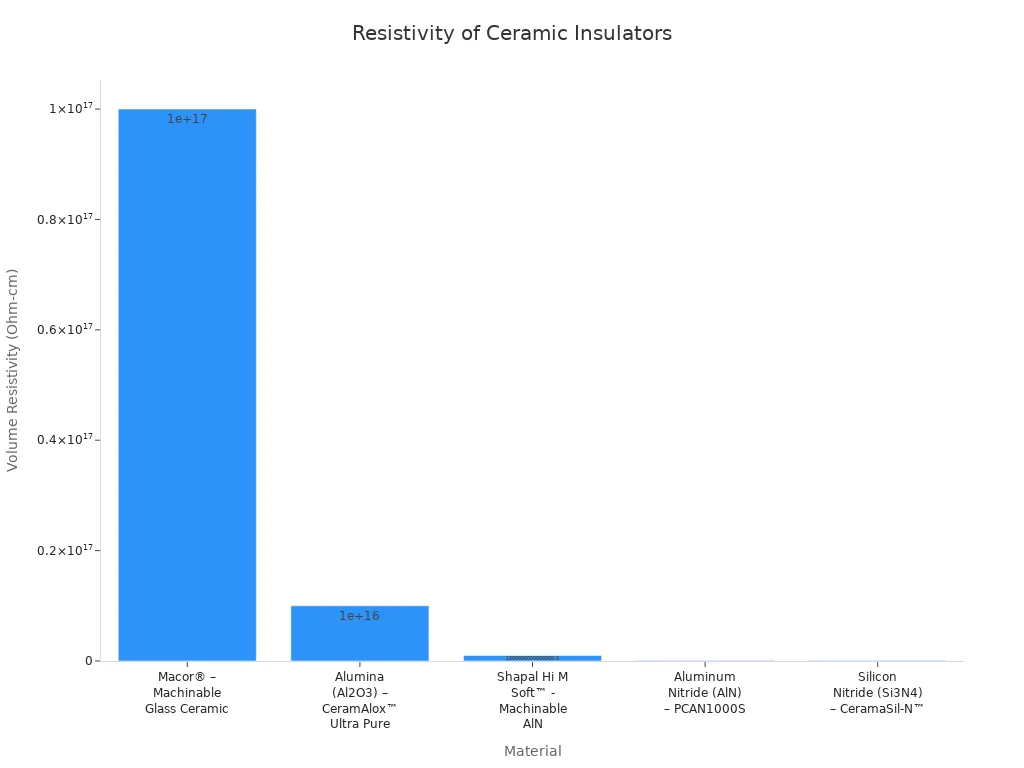
These numbers are very high. For example, alumina has a resistivity of 10^16 ohm-centimeters. This makes it great for stopping electricity. When you use a ceramic insulator, it keeps electric current from leaking or causing problems.
Dielectric Strength
Dielectric strength shows how much voltage a material can take before electricity goes through. A ceramic insulator has high dielectric strength. It can block very strong electric fields.
- Most ceramic insulators can handle 4 to 17 kilovolts per millimeter (kV/mm).
- Some ceramics can go up to 40 kV/mm.
- Plastics usually only handle 1 to 3 kV/mm.
This makes ceramic insulators good for high-voltage jobs. They keep you safe by stopping dangerous currents, even when voltage is high.
Note: If you need to block strong electric fields, a ceramic insulator is usually the safest and most reliable.
Ceramic Insulator Uses
Power Lines
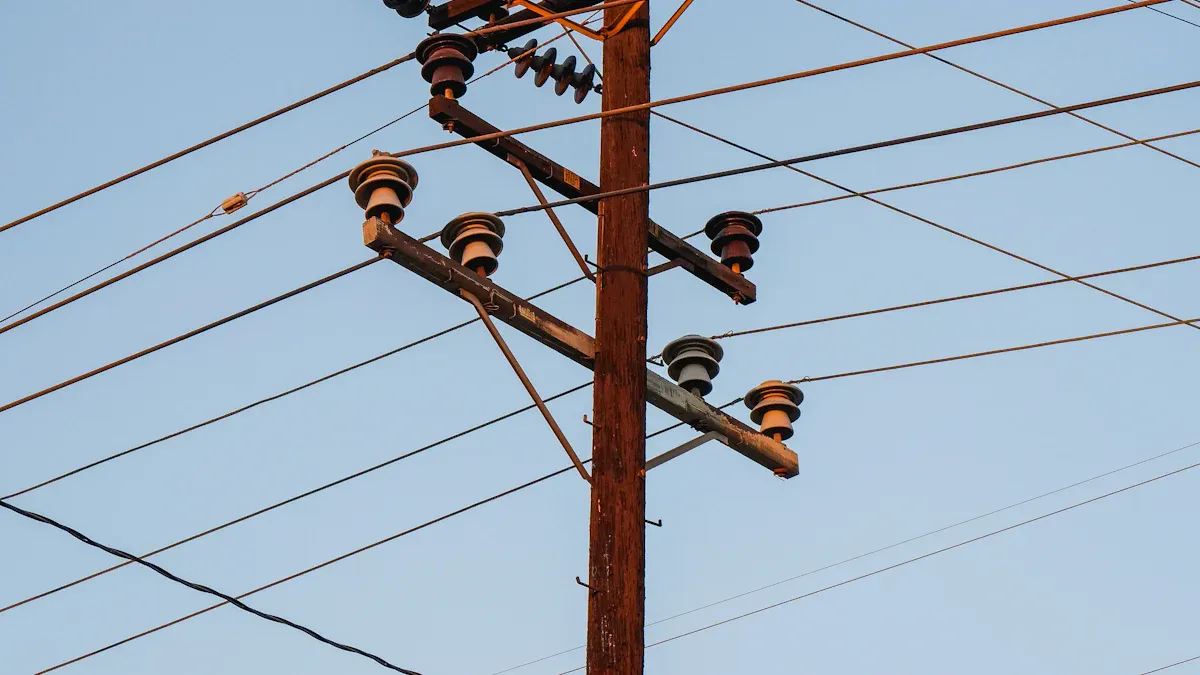
Ceramic insulators are often used on power lines. They keep wires apart and away from poles. This stops electricity from leaking or causing shorts. You see them in high-voltage systems and substations. They are also in transformers. Ceramic insulators work well because they handle strong electric fields. They also stand up to bad weather. They do not rust or break down in sunlight. Their high dielectric strength keeps people safe from electrical dangers.
Here is a table that explains why ceramic insulators are used for power lines:
| Advantage | Description |
|---|---|
| Durability | Lasts a long time, even outdoors |
| Weather Resistance | Stays strong in rain, snow, and sun |
| Thermal Stability | Handles high temperatures without breaking |
| Low Maintenance | Needs less care than other materials |
| Rust Resistance | Does not rust, so it lasts longer |
| High Dielectric Strength | Blocks strong electric fields |
| Safety | Prevents arcing and power surges |
Tip: For safe and long-lasting power lines, ceramic insulators are a great pick.
Electronics
Ceramic insulators are also found in electronics. They protect important parts in things like phones and computers. You see them in printed circuit boards too. These insulators stop electricity from going where it should not. They also block electromagnetic interference. This helps devices work right.
Ceramic insulators lower fire risks and stop power surges. Their strong build works in hot or cold places. You find them in wiring boards and electronic parts. They are even in LED accessories.
| Type of Ceramic Insulator | Applications |
|---|---|
| Steatite Ceramic Insulators | Wiring boards, electronic components |
| Metallized Ceramic Insulators | Semiconductor packaging, fiber optic device shells, LEDs |
| Electrical Insulators | Appliances, power generation, medical, and electronics |
High Voltage Systems
Ceramic insulators are important in high voltage systems. They are used in substations and transformers. These insulators hold up heavy wires and stop electricity from escaping. They can handle voltages from 11kV to 400kV. Their strong design stands up to wind, sunlight, and pollution.
You see ceramic insulators in lines with voltages of 110kV and more. They stop short circuits and electrical discharges. This keeps the system safe and working well. They are made from minerals like clay and quartz. They are fired at high heat to make them strong and steady.
- Ceramic insulators stop electric shocks.
- They last a long time, even in harsh places.
- Their design keeps high voltage systems safe and steady.
Comparison With Other Insulators
Plastic
Plastic is used a lot as an electrical insulator. It has great dielectric properties and works in many ways. Plastic is light and can be shaped easily. People use plastic when they want something cheap and flexible. But plastic does not last as long as a ceramic insulator in tough places.
Here is a quick comparison:
| Material | Electrical Resistance | Durability |
|---|---|---|
| Ceramics | Exceptional | Withstands harsh environmental conditions |
| Plastics | Excellent dielectric properties | Versatile and effective in various applications |
Plastic insulators are cheaper to make than ceramics. Ceramics cost more to make, especially if you do not make many. Ceramic packaging is best for sealing and high heat. You might use plastic for simple electronics. But you pick a ceramic insulator for hard or important jobs.
Tip: Use plastic for easy, cheap projects. Pick ceramics if you need something strong and that lasts a long time.
Glass
Glass insulators also stop electricity well. You see them on power lines and in electric systems. When you look at glass and ceramics, you should think about a few things:
- Durability
- Resistance to environmental conditions
- Weight
- Availability
Each one has good points and bad points. What you pick depends on what your system needs. The weather and place matter a lot. Glass is heavier and can break easier than ceramics. Ceramics usually last longer in bad weather.
Note: Always pick the insulator that fits your system and the local weather.
Rubber
Rubber insulators are very flexible. You can use them on bumpy surfaces or where you need a tight fit. Rubber does not crack and bends well. It is best for low or medium voltage jobs.
| Property | Rubber Insulators | Ceramic Insulators |
|---|---|---|
| Flexibility | Higher flexibility, suitable for uneven surfaces | Lower flexibility, more rigid |
| Mechanical Strength | High resistance, does not crack | High dielectric strength, durable in harsh environments |
| Voltage Application | Suitable for low to medium voltage | Ideal for high voltage and harsh environments |
You find rubber insulators in substations, near the sea, and on high voltage lines. Rubber is light and stands up to dirt and salt. Ceramic insulators work better for high voltage and tough places.
🛡️ Rubber insulators are best when you need something flexible and easy to care for. Ceramics are better for high voltage and rough places.
Limitations of Ceramic Insulator
Suitability Issues
Ceramic insulators do not work everywhere. They can break if you push or hit them hard. Strong winds or heavy snow might crack or chip them. The environment can change how well they work. Sunlight, moisture, and pollution can slowly hurt the surface. Ultraviolet rays and ozone make the material weaker as time passes. Big changes in temperature can also cause trouble. If it gets very hot or cold, the insulator may not stay strong. Some insulators only work in certain temperatures. Extreme heat can cause damage you cannot see right away.
Note: Always check the temperature rating before using an insulator outside. If you use it in wildfires or very hot places, it might still work, but you should look for damage.
Here are some problems you might see:
- Easy to break from force
- Gets weaker from sunlight, moisture, and pollution
- Can be damaged by ozone and oxygen
- May change how it works when temperatures go up or down
Durability
Ceramic insulators last a long time, but you must take care of them. Dirt, dust, and salt can build up on the surface. This can cause electricity to jump or short out. You should clean the insulators often to keep them working. Physical damage is also a problem. Strong winds or heavy snow can break them. Too much heat from electricity can make the insulator fail.
Here is a table showing common ways insulators can fail:
| Failure Mode | Cause | Result |
|---|---|---|
| Contamination failure | Dirt, dust, or salt buildup | Surface discharges, short circuit |
| Mechanical failure | Wind, snow, or impact | Cracks, loss of strength |
| Thermal failure | Too much heat or extreme conditions | Material damage, failure |
You should check and test insulators often. Look for cracks, chips, or signs of wear. Clean off any dirt or salt. Electrical tests help you find problems before they get worse.
🛠️ Regular care keeps your system safe and working well.
Ceramic insulators protect you well from electricity. They have high dielectric strength and high resistivity. This means electric current cannot go through them. They also have low dielectric loss, so they do not waste much energy. You can use ceramic insulators in power lines and electronics. They also work in high-voltage systems. They last a long time and can handle heat, chemicals, and bad weather.
| Property | Description |
|---|---|
| Low Dielectric Loss | Keeps energy loss low and performance high. |
| High Dielectric Strength | Handles high voltages without breaking down. |
| High Volume Resistivity | Stops electric current from leaking. |
Ceramics can cost more than some other materials. They might break if you hit them hard. Always pick the right insulator for your system. Make sure it fits the voltage, temperature, and place where you use it. This helps you get the best results.
FAQ
What makes ceramic a better insulator than metal?
Ceramics hold their electrons very tightly. Metals have electrons that move around easily. This is why electricity cannot pass through ceramics. Ceramics give better protection when you want to stop electric current.
Can you use ceramic insulators outdoors?
Yes, you can use ceramic insulators outside. They stand up to rain, sun, and pollution. You see them on power lines and in substations. Check for cracks or dirt to keep them working well.
How do you clean ceramic insulators?
Clean ceramic insulators with water and a soft brush. Take off dust, dirt, or salt. Do not use strong chemicals. Cleaning them often helps stop electrical problems and keeps your system safe.
Are ceramic insulators safe for high voltage?
Ceramic insulators are good for high voltage. They have strong dielectric strength. You can trust them to block strong electric fields and keep you safe.
Do ceramic insulators last a long time?
Ceramic insulators last a long time. They resist heat, chemicals, and weather. Check them often for damage. With care, they can last many years.


