


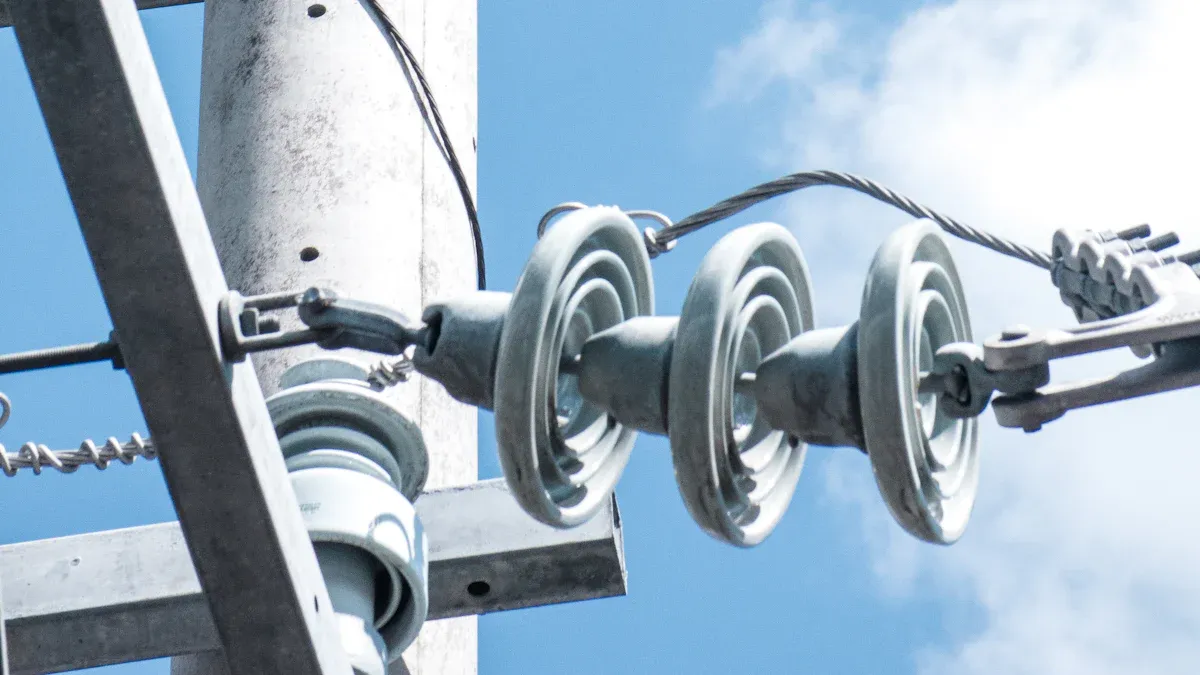
When you look at a strain insulator for your company, you check five main things:
- Durability
- Compliance
- Customization and support
- Value
- Lead time and supply
You want clear results, quick answers, and to be happy with your choice. These important things help you pick the right product and make smart choices.
Key Takeaways
- Pick strain insulators that last a long time and are tested. This stops them from breaking early and saves you money.
- Make sure the strain insulator meets rules like IEC and ANSI. This makes it safe and dependable.
- See if you can change the strain insulator for your project. Tell the company what you need so there are no delays.
- Think about all the costs, not just buying it. Remember to add costs for putting it in, fixing it, and if it stops working.
- Choose sellers who send things on time and talk clearly. This helps your projects finish on time and lowers problems.
Durability
Long-Term Performance
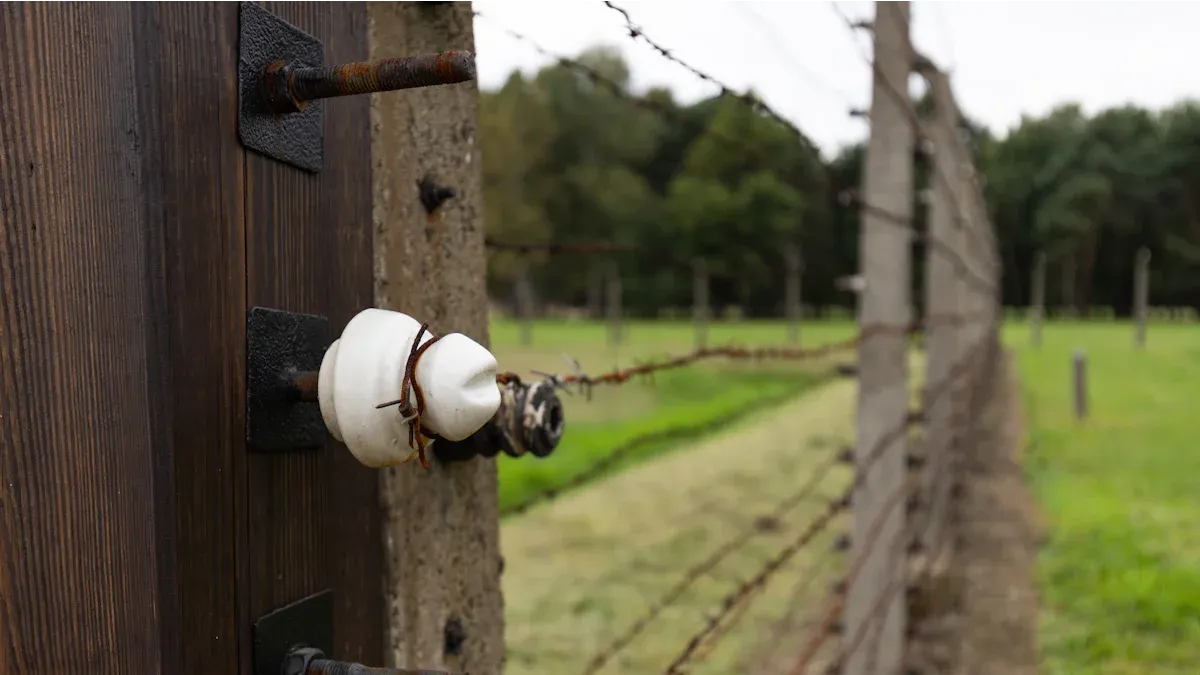
You want a strain insulator that lasts for many years. Companies make these products to work in hard places and under a lot of stress. They test each strain insulator for how strong it is, how much it can bend, and how long it will last. These tests make sure the product is tough, even if you do not know exactly how long it will last. Picking a strain insulator means you are buying something that works in rough places and keeps your equipment working.
Tip: Always see if the product passed hard tests for long use. This helps you stop early breakage and saves you money.
Reliability Factors
Many things can change how well your strain insulator works over time. You should know what might cause trouble before it happens. The table below lists the main things in the environment and how you use the insulator that can change how it works:
| Factor | Impact on Insulators |
|---|---|
| Pollution and Contamination | Makes flashover more likely, especially near the sea or in wet places |
| Moisture and Rainfall | Can cause problems because of stress from the weather |
| UV Radiation | Breaks down the material slowly |
| Mechanical Stresses | Wears out the insulator and makes it weaker |
You also need to think about which type of insulator you pick. Each type has its own usual problems and ways to find them:
| Insulator Type | Common Failures | Detection Difficulty |
|---|---|---|
| Porcelain | Puncture, cement growth | Hard to find without special tests |
| Toughened Glass | Mechanical separation | Easier to spot |
| Composite | Rare mechanical separation | Depends on the situation |
You can lower risk by picking the right insulator for your area and by checking them often. This helps you keep things working and stops big problems.
Strain Insulator Compliance
Industry Standards
You must check if your strain insulator follows the right rules. Rules like IEC, ANSI, and IEEE are important for safety and strength. These rules help you know the product will work well. If a product meets these rules, you can trust it more. This lowers problems and keeps your equipment safe.
Note: Always ask for a list of rules the product follows. This helps you compare choices and pick what is best for you.
Here is a table that shows some common rules and what they do:
| Standard | Focus Area | Why It Matters |
|---|---|---|
| IEC | Electrical safety | Keeps your system safe |
| ANSI | Mechanical strength | Stops things from breaking |
| IEEE | Performance testing | Makes sure it works well |
Certifications
You should look for certifications when you buy a strain insulator. Certifications mean the product passed hard tests from trusted groups. These tests check for quality, safety, and how well it works. If you see a certification, you know the product is good.
- UL Certification: Shows the product is safe to use.
- ISO Certification: Proves the company follows strict quality rules.
- CE Mark: Means the product meets European safety laws.
If you pick a product with the right certifications, you lower your risk. You make sure your system works well and stays safe. You also show your customers and partners that you care about quality.
Tip: Ask suppliers for copies of their certifications. This helps you avoid problems and makes buying easier.
Customization & Support

Tailored Solutions
You want a strain insulator that matches your needs. Every project is different, so you may need special features. Suppliers can give you choices to help you get the best fit. Some common ways to customize are:
| Customization Type | Description |
|---|---|
| Size | Changes in size for your project |
| Shape | Different shapes for how it works |
| Material Composition | Pick materials for better performance |
| Color | Choose colors you like |
| Surface Treatment | Make it stronger or work better |
| Insulation Properties | Pick how it handles heat or electricity |
Tip: Tell suppliers exactly what you need. This helps you get the right product and avoid waiting longer.
You can also ask for special boxes or labels to help you keep track of your items. Customization lets you have more control and helps you finish your project the way you want.
Technical Support
Good technical support helps you a lot. If you have a problem or question, you want quick help. Companies that give good support save you money and make you trust them more. For example, one top company has a team just for helping customers. This team helps people fix problems fast and answers questions quickly.
- You spend less on repairs and trust your supplier more.
- Fast help keeps your work going without stopping.
- Giving feedback helps suppliers get better.
The numbers show that good support means you need fewer repairs. This makes you happier and trust the supplier more. The best suppliers answer support requests very fast. The table below shows how long it takes them to reply:
| Supplier Name | Avg. Response Time | Ratings | Reorder Rate |
|---|---|---|---|
| Zhongshan Henglijia Technology Co., Ltd. | ≤1h | 5.0/5.0 | 50% |
| Hangzhou Weshare Import And Export Co., Ltd. | ≤1h | 5.0/5.0 | 50% |
| Shanghai Gongtao Ceramics Co., Ltd. | ≤4h | 5.0/5.0 | 17% |
| Dongguan Haikun New Material Co., Ltd. | ≤3h | 4.8/5.0 | 22% |
| Shenzhen Hard Precision Ceramic Co., Ltd. | ≤3h | 5.0/5.0 | 31% |
| Yixing Shengda Refractory Ceramic Co., Ltd. | ≤5h | 4.9/5.0 | 40% |
| Shanghai Huto Ceratric Co., Ltd. | ≤8h | 4.9/5.0 | 44% |
| Yixing Shenxing Technology Co., Ltd. | ≤4h | 5.0/5.0 | 31% |
| Liling Xing Tai Long Special Ceramic Co., Ltd. | ≤5h | 4.9/5.0 | 19% |
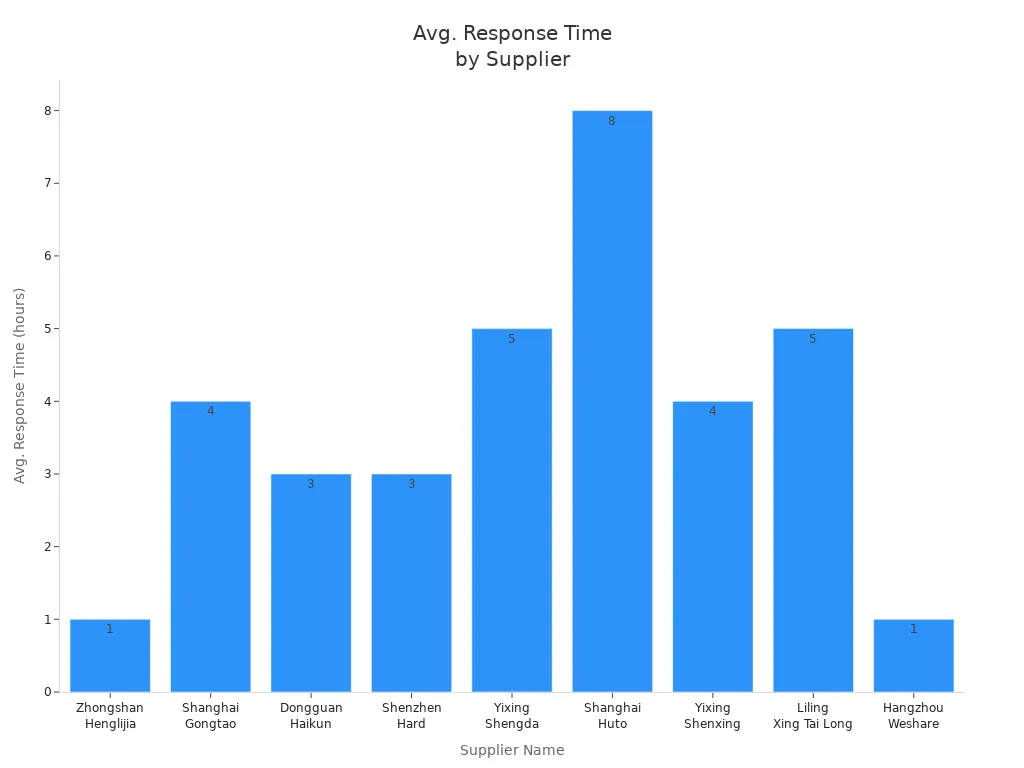
Note: Quick replies and high scores mean you can count on these suppliers for help.
Strain Insulator Value
Cost-Effectiveness
You want to get the most value for your money when you buy strain insulators. Cost-effectiveness means you look at both the price and the performance. You do not just pick the cheapest option. You compare how well each product works and how long it lasts. This helps you avoid extra costs from repairs or replacements.
When you buy in bulk, you see a wide price range. Most strain insulators cost between $0.16 and $3.65 per piece. For example:
- Some porcelain insulators cost about $1.22 each.
- Suspension insulators can reach $3.13 per piece.
- Other types often cost around $2.12 each.
You also need to meet minimum order quantities. These often start at 420 pieces for porcelain, 210 pieces for suspension, and 250 pieces for other types. Buying in bulk helps you get better prices and ensures you have enough stock for your projects.
Tip: Always compare the price with the expected lifespan and performance. A slightly higher price can save you money if the product lasts longer.
Total Ownership
You should look beyond the purchase price. Total ownership includes all costs during the product’s life. This means you consider installation, maintenance, downtime, and replacement. A strain insulator that needs fewer repairs or lasts longer gives you better value over time.
Think about these points when you assess total ownership:
- How often will you need to replace the insulator?
- Will you spend a lot on maintenance?
- Does the supplier offer support if you have issues?
A strong value proposition comes from a balance of price, quality, and service. You get the best results when you choose a product that fits your needs and keeps your long-term costs low.
Note: Always ask suppliers for data on product lifespan and maintenance needs. This helps you make a smart, value-driven decision.
Lead Time & Supply
Timely Delivery
You need strain insulators to arrive when you expect them. If they are late, your work can stop and you might lose money. Good suppliers know this is important. They use tracking systems that show where your order is right now. These systems help you see if there are any problems early. When you know your order’s status, you can plan your work better.
Suppliers also have backup delivery routes ready. If one route has a problem, they use another way. This keeps your supply chain working well. You do not have to wait long for parts. Your project stays on schedule and your clients stay happy.
Tip: Ask your supplier if they have tracking and backup plans. This helps you avoid problems and keep your project on time.
Here is a simple table showing what top suppliers do for fast delivery:
| Strategy | Benefit |
|---|---|
| Real-time tracking | Find delays early |
| Backup logistics routes | Fewer delivery problems |
| Multiple suppliers | Less chance of running out |
Supply Assurance
You want to trust that your supplier will always have what you need. Top suppliers use different ways to keep your supply steady. They buy from more than one source. This means you are not stuck if one source runs out. It lowers the risk of not having enough stock.
Suppliers use technology to talk with you better. They show you how much they have in stock right now. You can see what is available and order at the right time. Working closely with your supplier helps you avoid running out and keeps your business going.
- Using more suppliers keeps your supply chain strong.
- Seeing inventory helps you know what is in stock.
- Working together with suppliers makes sharing info easy.
- Should-cost modeling helps you guess prices and plan your budget.
Note: Pick suppliers who give clear updates and talk with you often. This helps you feel sure and stops delays that cost money.
Supply assurance means you always get the strain insulators you need. Your work goes smoothly and your customers are happy.
If you pay attention to these five main things, you can choose better:
- Durability
- Compliance
- Customization & Support
- Value
- Lead Time & Supply
Check this list each time you buy a strain insulator. You will get better results, have fewer problems, and work well with your suppliers. Making good choices helps you do well for a long time.
FAQ
What tests should you request for strain insulators?
You should ask for tests on mechanical strength. Ask for tests on electrical insulation. Ask for tests on weather resistance. Suppliers give IEC or ANSI test reports. These papers show if the product is reliable before you buy.
How do you verify supplier certifications?
You can ask for digital copies of certifications like UL, ISO, or CE. Check who gave the certification and when it expires. Good suppliers send these papers fast and answer questions about compliance.
Can you customize strain insulators for unique projects?
You can ask for custom sizes, shapes, or materials. Many suppliers offer special solutions. Share your project details early. This helps you avoid delays and makes sure the product fits your needs.
What is the typical lead time for bulk orders?
Lead times are usually between 7 and 30 days. You should check delivery times before you order. Suppliers with tracking and backup plans give better supply assurance.


